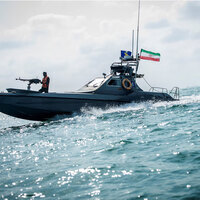


From spiking mortgage rates, to exposed pension funds, to Persian Gulf sovereign wealth funds contemplating how to extricate themselves from multi-billion-dollar renewable energy contracts, the American/Israeli war on Iran is sending seismic shocks through financial systems that are fundamental to the present and future wellbeing of hundreds of millions of people.
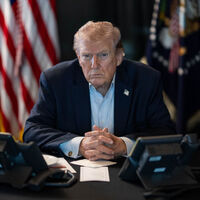
The economic impacts of the Trump administration's "little excursion" into Iran-now nearing the end of its third month-are being felt by homeowners across Canada, the United States, and Europe, as mortgage lenders raise their rates in anticipation of inflation.
In Canada, "three- and five-year fixed mortgages increased by 0.5% in just three weeks" in March, reported CBC News back in early April.
In the United States, the war "has driven the 30-year mortgage rate to 6.36%", reports the Financial Times.
The spike in mortgage rates in both countries arrives even as they struggle with an extended housing crisis.
Mortgage financing has also become markedly more expensive in Europe, with interest rates on 10-year loans in Germany rising 0.3% in March after falling that much in February, then continuing to increase in April.
The UK has experienced the greatest mortgage shock, with the rate on a two-year fixed mortgage increasing 1.13% between the end of February and the first week of April, the Financial Times reported.
The war is also a looming threat to pensions, many of which have lent assets to private equity firms with deep entanglements in Persian Gulf oil and gas infrastructure.
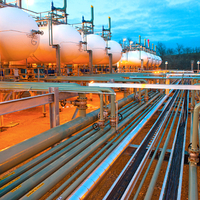
CalPERS and New York State Commons, two of the largest pension funds in the U.S., provide a case in point, Semafor warned in a recent post. The two funds have "considerable assets" currently tied up in IFM, a private equity firm that is part owner of VTTI, an energy infrastructure company that itself owns a massive oil storage terminal in Fujairah, in the United Arab Emirates.
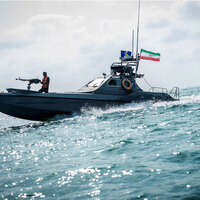
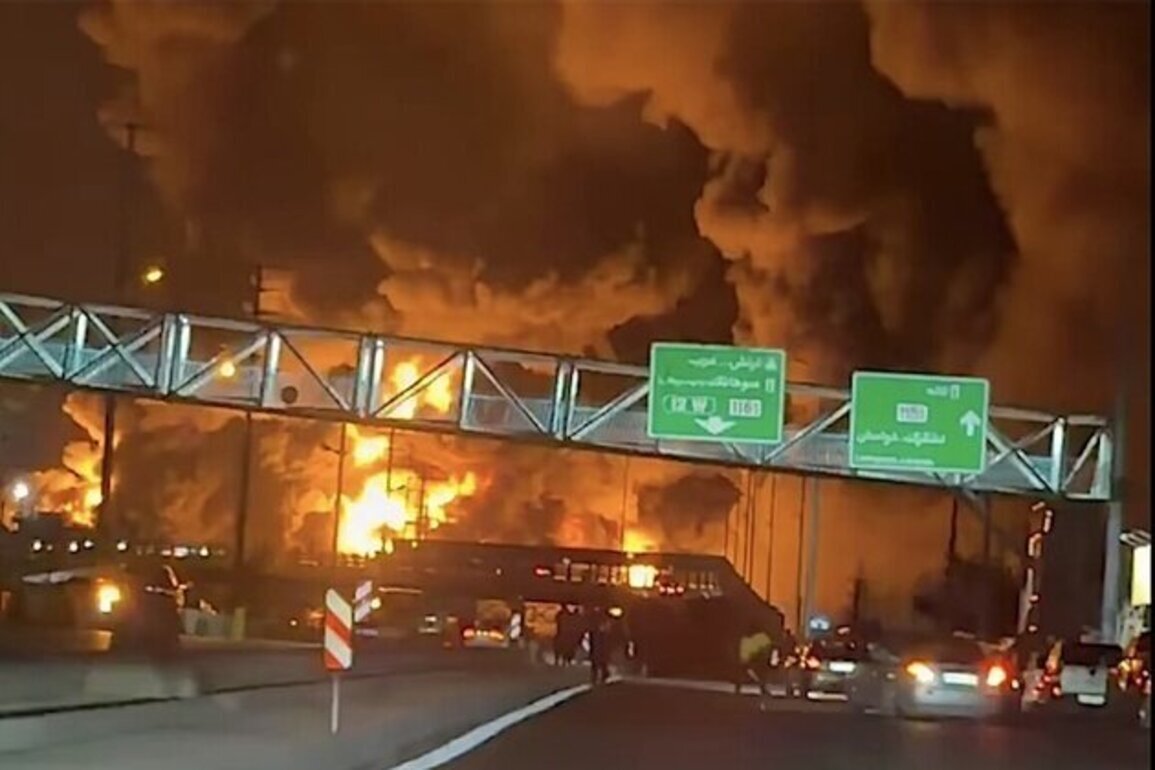
The terminal was attacked by Iranian ballistic and cruise missiles and drones on May 4.
"Until a couple of months ago, most people in private equity didn't think there was a geopolitical risk in shipping LNG in and out of the Gulf. Events have proved otherwise," Jim Baker, executive director of the Private Equity Stakeholder Project, a non-profit watchdog, told Semafor. Whether they have now made their investors wise to this change in risk profile remains "a question," he added.
Adam Scott, executive director of Shift Action for Pension Wealth and Planet Health, said the same lag in comprehension-and communication to shareholders-is a problem in Canada's pension sector.
Canadian pension funds "may not have fully absorbed" the significance of the energy shock caused by the war, "but they should begin the process of communicating to their members how their investment strategies will change to adapt in line with their long-term obligations to invest in the best interests of their members," Scott told The Energy Mix.
He said the volatility wrought by the war is one more reason for Canadian pension funds to get out of oil and gas, adding that any present "windfall profits" accruing from the spike in fossil fuel prices "pales in comparison to the far wider damage caused by the crisis elsewhere in their portfolio."
In particular, "Canadian pension funds should avoid investments in existing and new LNG export terminals or pipelines-the market for which was already assumed to be oversupplied in the next few years before this war started," Scott said. "Structural LNG demand will now be far lower over the long term than previously forecast, putting investments at risk from lower demand and lower prices."
Meanwhile, from the theatre of the war itself come rumblings that multi-billion-dollar green energy investments currently underwritten by Gulf sovereign wealth funds could be at risk, as several of Iran's neighbours contemplate how to survive their new role as collateral damage in Trump's war of choice.
"A number of Gulf countries have begun an internal review to determine whether force majeure clauses can be invoked in current contracts, while also reviewing current and future investment commitments in order to alleviate some of the anticipated economic strain from the current war," an unidentified Gulf official told the Financial Times in early March.
Invocations of force majeure-a clause in contract law that allows a party to escape contractual obligations, either temporarily or permanently, in the face of extraordinary events-are already ricocheting through oil and gas supply chains entangled in the Gulf war. A perilously underreported dimension of such financial retrenchment is the profound risk it poses to global investment capital, warns green energy venture capitalist Susan Su, in a March edition of her Climate Money podcast.
"Gulf Cooperation Council sovereign wealth funds collectively manage $6 trillion in global assets," Su says. "This accounts for over 40% of all sovereign wealth fund capital on Earth. If successful, force majeure would release the world's biggest investors and creditors from hundreds of billions of dollars in financial obligations that are currently the backbone of the AI boom and the energy transition."
Multiple billions of dollars in green energy contracts hang in the balance, with 50% of all green sovereign wealth fund assets held by Gulf funds. "Hundreds of clean gigawatts across dozens of countries around the world, including the U.S. are vulnerable," Su warns.
Substantial amounts of climate resilience funding are also in jeopardy.
The quasi-public ruminations about repatriating sovereign wealth funds may prove nothing more than an effort at diplomatic leverage, Su adds. But fear is a prime mover in markets.
"Simply knowing that force majeure is in the cards could be enough to shake the foundations of the confidence game that we call the global financial system."
And for all of this, she adds, we have to thank "an opaquely reasoned offensive strike."
Source: The Energy Mix